Avery Schulz · 27 October 2026
Workshops Equip Teams with Fresh Techniques for Tracking Genetic Shifts in Drought-Stressed Medicinal Plants
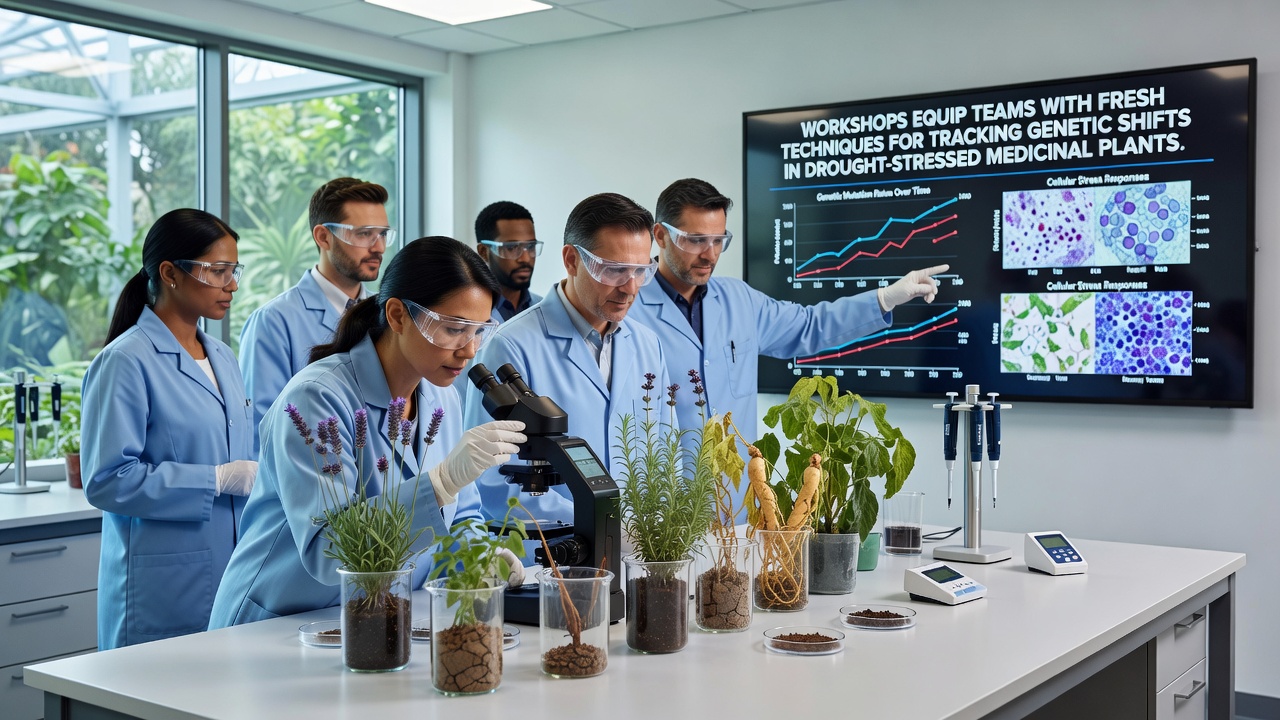
Workshops equip teams with fresh techniques for tracking genetic shifts in drought-stressed medicinal plants through hands-on sessions that combine field sampling with laboratory analysis and data interpretation. Participants learn to apply sequencing protocols and bioinformatics tools while examining how water scarcity alters gene expression in species such as Hypericum perforatum and Salvia officinalis. Sessions run across multiple days and draw attendees from agricultural research stations and university departments focused on plant physiology.
Core Components of the Training Programs
Training programs cover DNA extraction methods optimized for dehydrated leaf tissue, followed by targeted amplicon sequencing to identify single nucleotide polymorphisms associated with drought response. Teams practice quantitative PCR assays to measure transcript levels of stress-related genes, and they compare results across control and water-limited plots. Instructors demonstrate software pipelines that align sequences and calculate allele frequency changes over successive growing seasons. October 2026 workshops will introduce updated modules on long-read sequencing platforms that capture structural variants previously missed by short-read approaches.
Data from multi-year field trials indicate that certain populations of medicinal plants exhibit rapid shifts in allele frequencies at loci linked to stomatal regulation and osmoprotectant synthesis. Workshop participants review these datasets to calibrate their own monitoring protocols. Practical exercises require groups to design sampling strategies that account for soil heterogeneity and microclimate variation within experimental plots.
Integration of Field and Laboratory Methods
Field components begin with nondestructive leaf sampling techniques that preserve RNA integrity under high-temperature conditions. Teams then process samples on portable extraction devices before returning specimens to central laboratories for full-genome analysis. Instructors emphasize quality control checkpoints that reduce contamination risks during transport. One study revealed that standardized collection times at dawn minimized diurnal fluctuations in gene expression and improved reproducibility across sites.

Laboratory modules progress from basic marker validation to advanced machine-learning models that predict phenotypic outcomes based on genetic profiles. Participants import their own field data into shared repositories and run comparative analyses against reference genomes. Sessions highlight the importance of metadata standards so that results remain compatible with international databases maintained by agricultural research networks.
Geographic Reach and Collaborative Networks
Programs operate in temperate zones where medicinal herb cultivation supports both pharmaceutical supply chains and rural economies. Collaborations link institutions across North America, Europe, and Australia, allowing teams to exchange germplasm and harmonize analytical pipelines. According to reports from the United States Department of Agriculture, coordinated monitoring efforts have documented a 12 percent increase in drought-adaptive alleles within selected breeding lines over five years. Australian government agricultural agencies have published complementary findings on gene flow between cultivated and wild populations under variable rainfall regimes.
Workshops also address regulatory frameworks that govern the movement of genetic material across borders. Attendees review permitting requirements and traceability systems that ensure compliance while accelerating research progress. Case examples illustrate how standardized reporting formats facilitate meta-analyses that identify broad patterns in genetic adaptation across species and regions.
Conclusion
Continued expansion of these training initiatives supports consistent data collection on genetic shifts in drought-stressed medicinal plants. Teams equipped with updated techniques contribute to larger datasets that inform breeding decisions and conservation priorities. Ongoing sessions scheduled through October 2026 and beyond maintain momentum in methodological refinement and cross-institutional knowledge transfer.