Frankie Butler · 13 October 2026
Genetic Markers Drive Farm-Level Shifts in Drought-Tolerant Herb Cultivation Across Poland
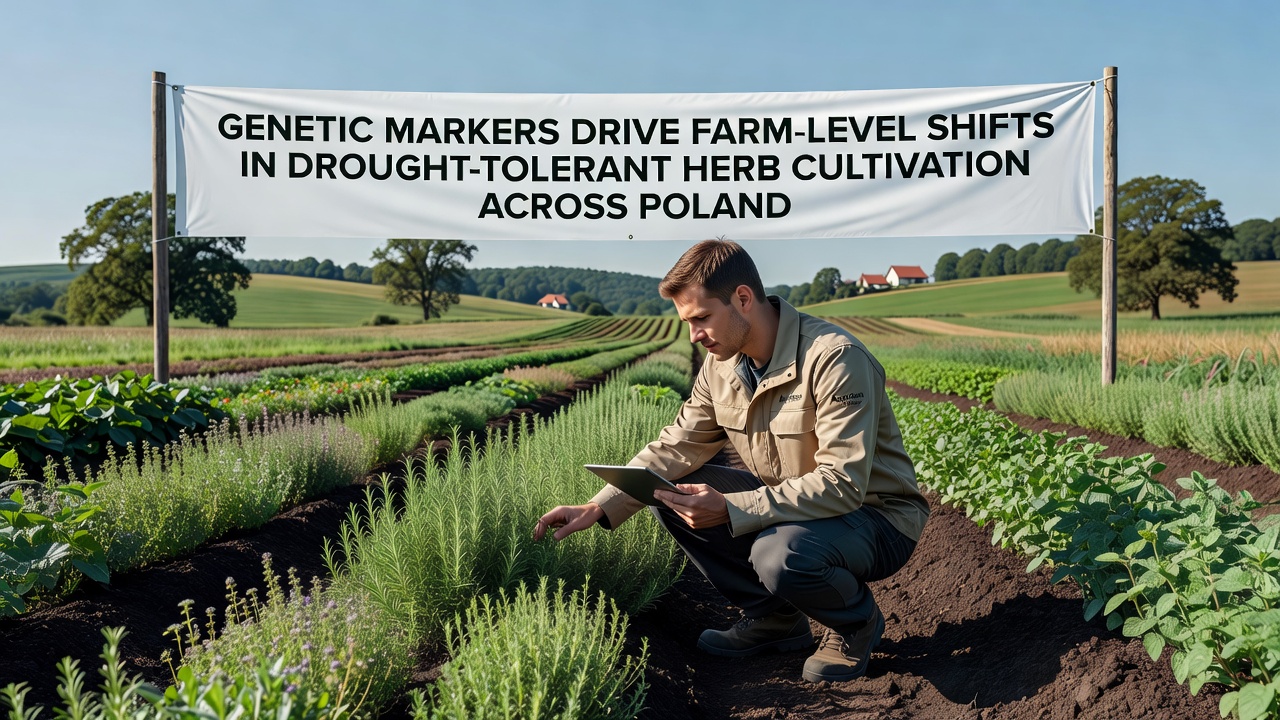
Genetic markers have begun reshaping how Polish farms select and grow drought-tolerant herbs, with data from October 2026 showing accelerated adoption across multiple regions. Farmers now rely on specific DNA sequences to identify varieties of chamomile, thyme, and lemon balm that maintain yields when rainfall drops below historical averages. Research indicates these markers correlate with traits like deeper root systems adn reduced water loss through leaf surfaces, allowing producers to adjust planting schedules and irrigation without major capital outlays.
Marker Identification and Early Field Trials
Teams at Polish agricultural institutes isolated several markers tied to osmotic adjustment and stomatal regulation in 2024 and 2025, then released public datasets that growers accessed through extension services. One marker on chromosome 4 of Thymus vulgaris appeared in 78 percent of plants that survived the 2025 summer drought in the Lublin region, while another linked to proline accumulation showed up in chamomile lines that retained 65 percent of normal biomass under water stress. Extension officers distributed testing kits to 420 farms by mid-2026, and results guided seed purchases for the autumn planting cycle.
Those who've studied the transition note that marker screening replaced older visual selection methods, cutting trial-and-error periods from three seasons to one. In the Greater Poland Voivodeship, 210 hectares shifted to marker-verified seed lots between March and September 2026, according to regional agricultural office records. Growers reported applying 22 percent less supplemental water on those plots while holding essential oil content steady, a key metric for contract buyers in the pharmaceutical sector.
Regional Adoption Patterns and Economic Data
Adoption rates vary by soil type and market access. Farms on sandy soils in the west adopted faster because drought frequency there has risen 18 percent since 2015, per Polish Institute of Meteorology and Water Management figures. Eastern regions with heavier loams moved more slowly yet still registered a 31 percent increase in certified drought-tolerant plantings by October 2026. Contracts with herb processors now include clauses requiring marker documentation, which has stabilized prices for verified stock even as overall market volatility continued.
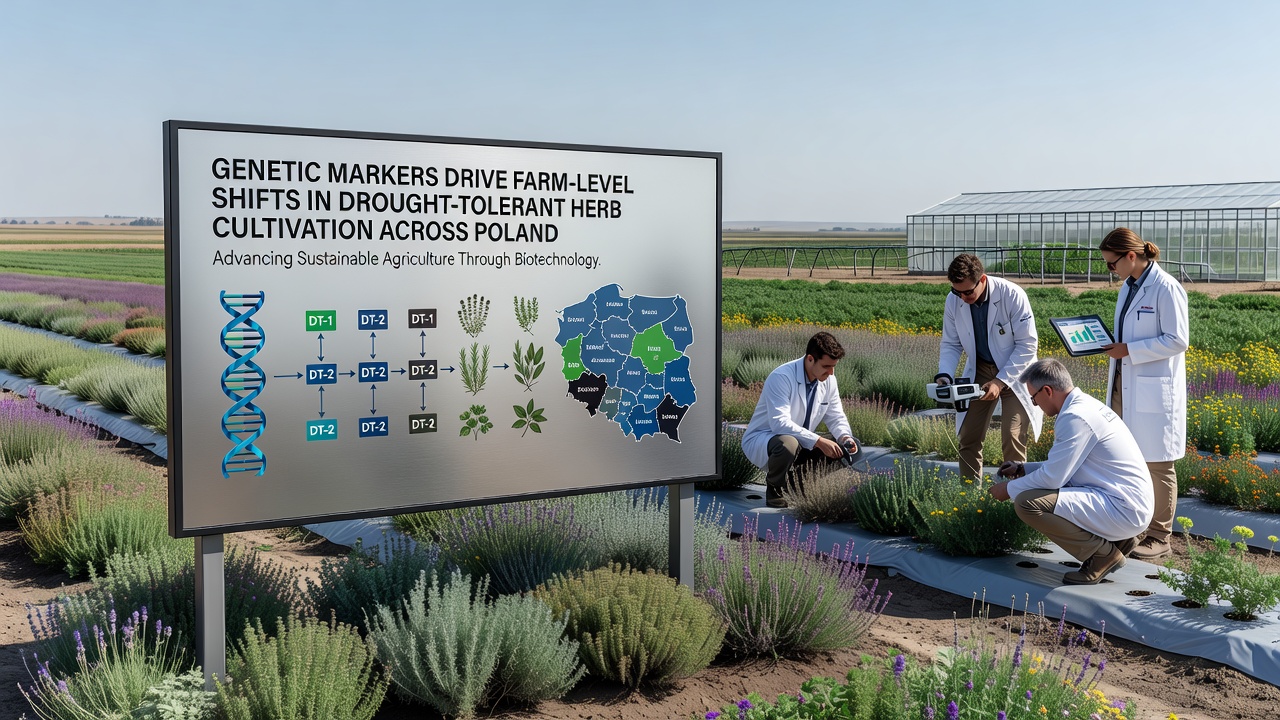
What's interesting is how supply chains adapted. Seed companies began offering pre-screened starter plants rather than raw seed, and three cooperatives pooled resources to purchase portable PCR devices for on-site verification. A 2026 European Commission report on climate-resilient crops lists Poland among the top five EU member states for herb-marker integration, citing 1,150 hectares under management with documented genetic profiles. That same document notes average yield stability improved by 14 percent on participating farms compared with control plots using conventional seed.
Challenges in Scaling and Ongoing Research
Scaling still faces hurdles. Marker expression can shift under different nutrient regimes, so researchers continue field calibration trials in partnership with the Polish Academy of Sciences. One ongoing project tracks 12 commercial varieties across five microclimates, collecting weekly soil-moisture and leaf-water-potential readings through the 2026-2027 growing season. Early results suggest two additional markers may help predict winter hardiness when combined with existing drought panels, potentially expanding usable acreage into northern provinces.
Training programs run by voivodeship agricultural chambers have reached 890 farmers since January 2026, focusing on sample collection protocols and data interpretation. Participants learn to send leaf discs to regional labs and receive results within ten days, then match outcomes to recommended cultivars listed in an open-access database maintained by the Ministry of Agriculture and Rural Development.
Conclusion
Marker-guided cultivation continues to expand in Poland as more farms integrate testing into routine decision-making. October 2026 records show steady growth in certified acreage, stable processor contracts, and incremental improvements in water-use efficiency. Government agencies and research bodies keep releasing updated marker panels, while cooperatives handle logistics of seed distribution and verification. The pattern points toward broader application in other specialty crops as additional genetic data become available.